■Introduction
Singapore is home to several world-class universities, attracting talented students from around the world. In addition to academic activities, extracurricular activities such as student clubs are also very active, and our office has been working in collaboration with universities in Singapore on various initiatives.
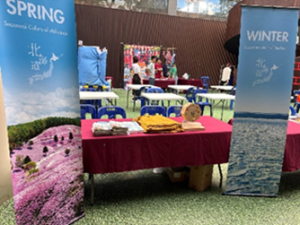
As one example, this report introduces our tourism promotion booth at the “Japanese Cultural Festival” held at Nanyang Technological University (NTU) on February 3 and 4, 2026.
■Nanyang Technological University (NTU)
Nanyang Technological University is one of Singapore’s leading universities, ranked 12th in the world in the “QS World University Rankings 2026” by Quacquarelli Symonds, a UK-based university evaluation organization.
With approximately 33,000 students, it is one of Asia’s top engineering and technology universities. The university also offers Japanese language classes, and students who are interested in Japanese culture, and also runs a Japanese Appreciation Club.
■Japanese Cultural Festival
The Japanese Appreciation Club holds the “Japanese Cultural Festival” every February at campus facilities, providing students and university staff with opportunities to experience Japanese culture, such as traditional festival games, tea ceremony, and handicrafts.
This year, the event was held over two days, on February 3 and 4, and our office participated by setting up a booth to promote tourism in Hokkaido to visitors.
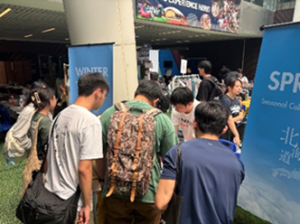
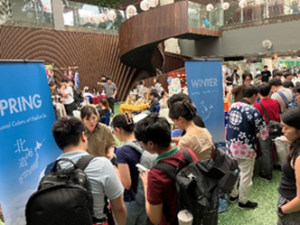
As the venue was located within the university complex with a food court and various shops frequently used by students, many visitors stopped by our booth, including students taking breaks and those passing through the area.
Visitors shared various comments, such as:
“I would like to plan a trip to Hokkaido this summer. Is the temperature lower than in Singapore?”
“I like Japanese history, so I would like to visit historical sites in Hakodate.”
We also heard an interesting story from an Indian student, who said:
“I traveled in Hokkaido for about a week last year. As I am a vegetarian and the dining options were limited, I stayed in a accommodation that has a kitchen and cooked for myself during the trip.”
In Singapore, Hokkaido already enjoys a high level of name recognition, and many people have either traveled to Hokkaido or are familiar with its image—such as its cool climate, snow, and food culture. However, awareness among younger generations is still developing, and through this event we were able to feel the effectiveness of promoting Hokkaido.
■Conclusion
Going forward, in addition to promoting Hokkaido at university events, we will continue to strengthen relationships with local universities and explore opportunities for collaboration that can create new connections between the world and Hokkaido.
▼Scenes at the Japanese Cultural Festival