Popular Japanese Content in Singapore

■Introduction
Singapore is home to numerous high-quality concert halls and theaters, and serves as a cultural hub in Southeast Asia where popular artists from around the world frequently perform. In addition, Japanese content enjoys strong popularity, particularly among young people, and it is not uncommon for Japanese artists and actors to visit Singapore for concerts and stage performances.

In this local report, we introduce Japanese content that is more accessible and familiar, focusing on popular Japanese films and characters in Singapore.


■Popular Japanese Films and Dramas in Singapore
Movie theaters in Singapore are quite similar to those in Japan in terms of ticket purchasing systems and screening facilities. However, reflecting Singapore’s multicultural society, a wide variety of films—including Hollywood, Chinese, and Bollywood productions—are regularly screened.

Japanese animated films are also highly popular. In 2025, titles such as Demon Slayer, Jujutsu Kaisen, and Chainsaw Man were screened.
In particular, Demon Slayer enjoyed tremendous popularity. Voice actors visited Singapore in conjunction with the film’s release, and special exhibitions featuring movie materials were held, delighting many fans.

In addition to anime, the theatrical version of Kodoku no Gourmet (Solitary Gourmet)—which also has a strong fan base in Singapore—was screened.


■Growth of VOD services such as Netflix
The use of VOD (video-on-demand) services is widespread in Singapore, allowing many people to easily enjoy films and dramas from around the world.

On Netflix, which has a large user base in the country, Korean and Chinese dramas often dominate the rankings. However, as of March 13, 2026, the live-action adaptation of ONE PIECE ranked No. 1, demonstrating its popularity alongside the original anime and manga.

Meanwhile, the domestic cinema industry has been facing challenges, with a major local cinema chain suspending operations across all its locations last year. The growing popularity of VOD services is considered one of the contributing factors.


■Populartity of Japanese Characters
Japanese “kawaii” (cute) culture has also taken root in Singapore. Pop-up stores featuring Japanese characters are occasionally opened, and it is common to see people of all ages carrying items with mascots such as Pokémon and Hello Kitty on their bags.

Singapore also has its own cultural heritage known as Peranakan culture, characterized by its use of pastel colors and charming aesthetics. This cultural background may be one of the reasons why Japanese kawaii culture is so well received.


■Conclusion
In recent years, the spread of social media and VOD services has made it easier to access overseas content. As a result, many people have developed an interest in Japan—and even regions like Hokkaido—through Japanese content.

Our office will continue to closely monitor local trends and explore more effective ways to promote Hokkaido in Singapore.

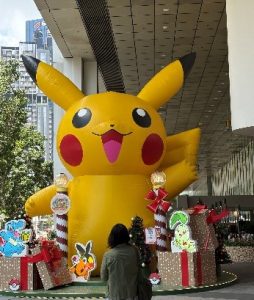
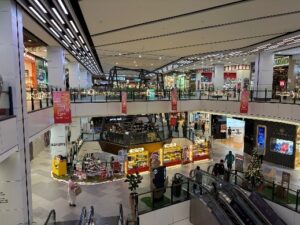
▼ A giant Pokemon ballon was displayed at a local shopping mall, attracting many visitors who stopped to take photos.

Popular Japanese Content in Singapore Read More »

Initiatives in collaboration with leading universities in Singapore

■Introduction
Singapore is home to several world-class universities, attracting talented students from around the world. In addition to academic activities, extracurricular activities such as student clubs are also very active, and our office has been working in collaboration with universities in Singapore on various initiatives.

As one example, this report introduces our tourism promotion booth at the “Japanese Cultural Festival” held at Nanyang Technological University (NTU) on February 3 and 4, 2026.

■Nanyang Technological University (NTU)
Nanyang Technological University is one of Singapore’s leading universities, ranked 12th in the world in the “QS World University Rankings 2026” by Quacquarelli Symonds, a UK-based university evaluation organization.

With approximately 33,000 students, it is one of Asia’s top engineering and technology universities. The university also offers Japanese language classes, and students who are interested in Japanese culture, and also runs a Japanese Appreciation Club.

■Japanese Cultural Festival
The Japanese Appreciation Club holds the “Japanese Cultural Festival” every February at campus facilities, providing students and university staff with opportunities to experience Japanese culture, such as traditional festival games, tea ceremony, and handicrafts.
This year, the event was held over two days, on February 3 and 4, and our office participated by setting up a booth to promote tourism in Hokkaido to visitors.

As the venue was located within the university complex with a food court and various shops frequently used by students, many visitors stopped by our booth, including students taking breaks and those passing through the area.

Visitors shared various comments, such as:
“I would like to plan a trip to Hokkaido this summer. Is the temperature lower than in Singapore?”
“I like Japanese history, so I would like to visit historical sites in Hakodate.”

We also heard an interesting story from an Indian student, who said:
“I traveled in Hokkaido for about a week last year. As I am a vegetarian and the dining options were limited, I stayed in a accommodation that has a kitchen and cooked for myself during the trip.”

In Singapore, Hokkaido already enjoys a high level of name recognition, and many people have either traveled to Hokkaido or are familiar with its image—such as its cool climate, snow, and food culture. However, awareness among younger generations is still developing, and through this event we were able to feel the effectiveness of promoting Hokkaido.

■Conclusion
Going forward, in addition to promoting Hokkaido at university events, we will continue to strengthen relationships with local universities and explore opportunities for collaboration that can create new connections between the world and Hokkaido.

▼Scenes at the  Japanese Cultural Festival

Initiatives in collaboration with leading universities in Singapore Read More »

Activities of Start-up companies in Singapore

■Introduction
In recent years, Singapore has attracted global attention as a hub for entrepreneurship. As of 2024, the amount of venture capital funding raised ranks 5th in the world (Tokyo: 7th), making Singapore the largest startup hub in ASEAN.

In this report, we introduce the Singapore government’s support measures for startup companies, as well as some distinctive startups based in Singapore.

Singapore Government’s support for Start-ups
The Singapore government works in collaboration with world-class public universities in the country to cultivate entrepreneurial talent, including programs that send students overseas.

In addition, the government has eased employment pass requirements for foreign entrepreneurs and is actively working to attract entrepreneurs from around the world, rather than limiting opportunities to domestic talent.

Furthermore, a wide range of support measures has been introduced for startup companies, such as the provision of affordable office facilities for startups and the establishment of co-investment schemes between the government and venture capital firms.


■Start-ups originating in Singapore
As of July 2024, there were 5,221 startup companies based in Singapore. While many span across many technology sectors —such as artificial intelligence (AI), the fintech sector is said to have the largest number of startups, with approximately 620 companies.

Furthermore, as of December 2024, 16 unicorn companies (companies established within the past 10 years with a valuation exceeding USD 1 billion) have emerged in Singapore. In the past, unicorns were mainly consumer-oriented services, such as the well-known ride-hailing app Grab. However, in recent years, there has been a noticeable increase in startups in the fintech and AI sectors.

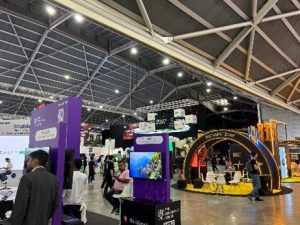
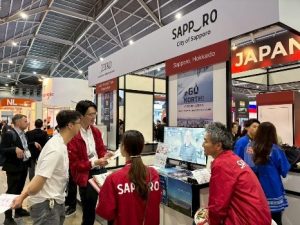
In the fintech field, the high level of attention can also be seen in events such as the government-hosted international conference and exhibition, the Singapore FinTech Festival. At last year’s event, the Japan FinTech Association operated a Japan Pavilion, and the City of Sapporo also exhibited a booth to promote the “GX Financial and Asset Management Special Zone.” Our office also worked together to promote the attractions of Hokkaido and Sapporo at the event.


■Conclusion
As Singapore-based startups increasingly expand into Japan in search of business opportunities, there are also Japanese startups based in Singapore that are actively pursuing overseas expansion. In Hokkaido as well, initiatives involving collaboration among industry, academia, and government are being developed to create an ecosystem that fosters startups aiming to compete globally.

Going forward, we will continue to gather information locally so that it may contribute to the development of entrepreneurial talent in Hokkaido and provide insights for addressing regional challenges.

Reference:
JETRO Singapore Office. “Singapore as a Hub for Co-creation with Startups, FY2024 (March 2025).” Japan External Trade Organization.https://www.jetro.go.jp/world/reports/2025/02/52d75300ac5dde1d.html


▼Scenes from the Singapore FinTech Festival 2025 held last November. Many visitors stopping by the Sapporo City booth.

Activities of Start-up companies in Singapore Read More »

Hokkaido Exhibits at One of Southeast Asia’s Largest Food Fairs!

■Introduction

Hokkaido Exhibits Again at Asia Pacific Food Expo (APFE) in Singapore.

At the Asia Pacific Food Expo (APFE), an annual food fair held in Singapore, Hokkaido participated once again following the previous year. In addition, a Hokkaido Food Business Meeting was held at a separate venue on the first day of the event, making it a valuable occasion to promote Hokkaido’s food industry. This report provides an overview of the APFE and the Hokkaido Food Business Meeting.


■About Asia Pacific Food Expo

・Organizer:Singapore Food Manufacturers’ Association (SFMA)

・Date & Time:December 5 (Fri) – December 8 (Mon), 2025 | 11:00 – 21:00

・Venue:Singapore EXPO Hall 4(1 Expo Door, Singapore 486150)

・Overview:One of Southeast Asia’s largest B2C food fairs, with approximately 200 exhibitors each year and around 300,000 visitors.


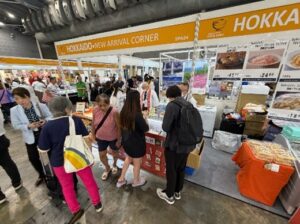
From Hokkaido, “Hokkaido Dosanko Plaza” took the lead in showcasing products from 18 companies across the prefecture. The products featured a wide range of Hokkaido specialties, including sweets, cheese, delicacies, instant noodles, and frozen scallops. Through live demonstrations and tastings at the booth, many visitors were drawn in to experience the offerings firsthand.

Exhibiting businesses shared their feedback, noting that, unlike domestic events, visitors provided clear and direct opinions, making it easier to understand market needs—a valuable learning experience. Some also observed, for example, that while Singaporeans are known to enjoy “sweet” and “spicy” flavors, products with strong saltiness were less well received. Overall, the event provided a valuable opportunity to introduce the appeal of Hokkaido-produced foods to the people of Singapore.

▲ Hokkaido Booth @ APFE


■Overview of the Hokkaido Food Business Meeting

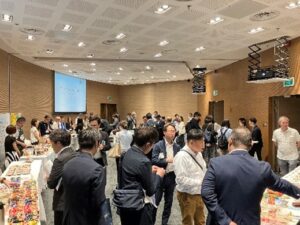
On the first day of the event, a Hokkaido Food Business Meeting was held at a separate venue within the event facility where APFE was taking place. A total of 15 companies and organizations from Hokkaido participated, promoting their products to local business stakeholders.

Participating Hokkaido businesses shared feedback such as: “It was valuable to hear directly from local distributors about market demand trends.” “We were able to exchange business cards with representatives from local branches of major trading companies and department stores, which we feel will help build future relationships.”

The meeting provided an important opportunity for Hokkaido companies to connect with local partners and gain insights into the Singapore market.

▲ Hokkaido Food Business Meeting

■Conclusion

Participation in this event served to strengthen the relationship between Singapore and Hokkaido and represents one of the initiatives aimed at expanding exports of Hokkaido-produced foods. We will continue our efforts to promote Hokkaido’s food products, contributing to the development of the prefecture’s food industry.

Hokkaido Exhibits at One of Southeast Asia’s Largest Food Fairs! Read More »

Popular ways to spend leisure time in Singapore

■Introduction

Singapore, just like in Japan, many residents enjoy their leisure time on weekends. Taking a break from busy daily life and spending quality time with family and friends is a common trait among busy Singaporeans. However, in the city-state of Singapore, where skyscrapers dominate the skyline, the ways people spend their leisure time also reflect the country’s unique character. This report introduces how Singaporeans typically spend their free time.


■Shopping at Local Malls

Singapore is well-known as a shopping paradise, and many of the city’s major MRT stations are connected to large shopping malls. Each mall has its own character: Marina Bay Sands and ION Orchard are popular with tourists for their luxury brand stores; Somerset, in the bustling city center, attracts younger crowds with trendy cafés; and malls frequented by residents typically house supermarkets, pharmacies, and fashion outlets, reflecting how closely these malls are integrated into everyday life.


■Day trips to Johor Bahru (Malaysia)

Johor Bahru, located at the southern tip of Malaysia just across the border from Singapore, has become a popular weekend getaway. Easily accessible by car, bus, or train, it attracts Singaporeans with its lower cost of living compared to Singapore. Visitors can enjoy shopping, dining, and theme parks at more affordable prices. While many Singaporeans make day trips, it is officially an international journey, so a passport is required for immigration clearance. Interestingly, several people also commute from Johor Bahru to Singapore for work, offering a glimpse into Singapore’s role as a global city.


■Short trips to resorts in Neighbouring countries

Due to Singapore’s small size and urban landscape, many residents prefer traveling to destinations where they can enjoy nature. The Indonesian resort islands of Bintan and Batam are popular weekend getaways, reachable by ferry in about an hour from Singapore. On Bintan Island, visitors can enjoy resort stays, water activities, and firefly-watching tours, while Batam Island offers nature-rich resorts where many opt to play golf.


■Conclusion

Understanding the lifestyle of Singaporeans can provide insights into effective ways to promote products and destinations locally. To support Hokkaido promotion in Singapore, we will continue to gather information on local trends and consumer behavior.


▲A shopping mall (Great World City) which locals frequent. Hokkaido Dosanko Plaza has an outlet at this mall


▲A resort hotel on Bintan Island, located less than an hour by ferry from Singapore

Popular ways to spend leisure time in Singapore Read More »

“Hokkaido” seen around the streets of Singapore

■Introduction

In our previous on-site reports, we have highlighted the popularity of Hokkaido travel and cuisine in Singapore. But even just walking around the city, you can unexpectedly come across the name “Hokkaido.” This time, we would like to introduce how “Hokkaido” is closely connected to everyday life in Singapore.


■”Hokkaido” seen in Singapore Restaurants

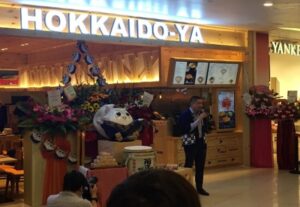
Singapore has a vibrant dining scene, with a wide variety of restaurants lining the streets. Looking through local restaurant menus, you’ll often find dishes featuring the word “Hokkaido,” such as Hokkaido Butter, Hokkaido Scallops, Hokkaido Rice, and Hokkaido Corn. There is even a Japanese restaurant named HOKKAIDO-YA, showing just how well-known the name “Hokkaido” has become in Singapore.

▲ Japanese Restaurant「HOKKAIDO-YA」


■”Hokkaido” seen in Singapore Cafés

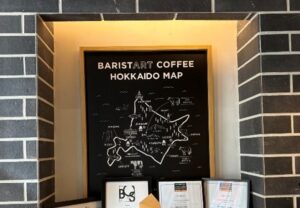
In Singapore, the traditional coffee KOPI, made with sugar and condensed milk, is well-known, but modern cafés serving drinks like lattes and cappuccinos are also very popular. The Hokkaido-born café chain Barista Coffee has opened branches in Singapore, attracting customers with its stylish spaces where you can enjoy both coffee and desserts. Upon entering the café, a large map of Hokkaido greets visitors, and the menu highlights the use of HOKKAIDO BIEI JERSEY MILK. Even in faraway Singapore, you can experience a genuine taste of Hokkaido.

▲ Hokkaido Map inside the café


■”Hokkaido” seen in Travel Catelogs

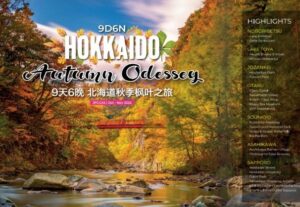
Hokkaido is a popular travel destination among Singaporeans, who have a strong interest in travel. Major local travel agencies prominently feature Hokkaido trips in their catalogs. Attractions such as Jigokudani (Hell Valley) in Noboribetsu, the Canal in Otaru, and Odori Park in Sapporo are often highlighted as key points of interest.

▲ Singapore local travel agent’s travel catelog


■Conclusion

“Hokkaido” enjoys high recognition in Singapore, with its brand well-established in both food and tourism. Even while shopping at local supermarkets, you might find yourself thinking, “Hokkaido products are even here!” Our office will continue to seize various opportunities to share the charm of Hokkaido with more Singaporeans and actively promote its appeal.

“Hokkaido” seen around the streets of Singapore Read More »

Popular Travel Destinations in Hokkaido Among ASEAN Countries

■Introduction

In this month’s local report, we feature Singapore and Malaysia, highlighting popular travel destinations within Hokkaido and how visitors from these countries prefer to spend their time during their stay. The insights are based on feedback gathered from visitors at recent travel fairs our office participated in.
The number of foreign tourists who visited Japan and Hokkaido from each country in FY2024 is as follows:

■Singapore

Singapore, which is smaller in area than Sapporo and enjoys a warm climate all year round, is known for its strong enthusiasm for travel. Many Singaporeans travel abroad in search of seasonal scenery and activities, and numerous travel fairs and tourism promotion events are held throughout the year.

Among the various destinations, Hokkaido — with its vast land, rich natural environment, and cool climate — is one of the most popular choices for Singaporean travelers. For first-time visitors, areas such as Sapporo, Noboribetsu, Hakodate, and Furano are especially favored for their famous Hokkaido cuisine, snow activities, and flower fields.

For repeat visitors, however, there is growing interest in exploring destinations that cater more to personal preferences, such as the Northern and Eastern Hokkaido regions. At “NATAS Holidays,” Singapore’s largest travel fair held this August, inquiries included topics such as how to reach remote islands and available accommodations there, recommended areas for camping, and places with beautiful stargazing opportunities.

In addition, many Singaporeans enjoy self-drive trips, citing reasons such as “I want to experience driving on Hokkaido’s wide roads” and “It’s more convenient to travel by car when bringing along three generations of my family.”

▲Hokkaido Booth at NATAS Holidays 2025

■Malaysia

Like Singapore, Malaysia has a tropical climate with little seasonal variation, making Hokkaido, with its snowy landscapes and flower fields, a highly appealing travel destination.
According to the Japan National Tourism Organization (JNTO), most Malaysians have not yet travelled to Japan, and at “MATTA Fair,” Malaysia’s largest travel exhibition held in September, many visitors expressed interest in visiting Hokkaido for the first time. Popular experiences included not only snow activities, which are impossible to enjoy in Malaysia, but also flower fields, which drew strong interest from many who saw them featured in brochures.
As approximately 60% of Malaysia’s population is Malay, many travellers are mindful of halal dining options when choosing their destinations. Therefore, urban areas with more restaurants and accessible information often better meet their needs. In Hokkaido, there are ramen shops, dessert stores, and other establishments that cater to halal requirements, and some travellers mentioned that they researched these options in advance so they could fully enjoy Hokkaido’s local cuisine.

▲Hokkaido Booth at MATTA Fair 2025

■Findings

As ASEAN countries are generally hot and humid throughout the year, many people find Hokkaido — with its completely different climate and environment — especially appealing. Our office will continue to actively promote the attractions of Hokkaido to further expand inbound tourism from the region.

Popular Travel Destinations in Hokkaido Among ASEAN Countries Read More »

Promoting Hokkaido at Singapore’s largest travel fair, “NATAS Holidays 2025”

■Introduction

“NATAS Holidays 2025,” held from August 15 (Fri) to 17 (Sun), is Singapore’s largest travel fair, where tourism professionals from around the world gather to promote destinations from various countries and regions. Representing Hokkaido, the Hokkaido Tourism Organization, along with many local governments and related companies, participated in the event to showcase the charm of Hokkaido to Singaporeans searching for holiday destinations. This local report brings you a closer look at the event’s highlights.

■Tourism Promotion at the Hokkaido Booth

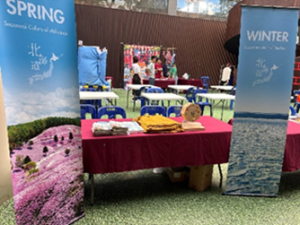
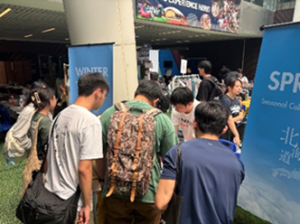
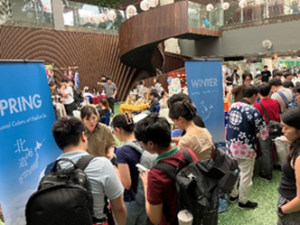
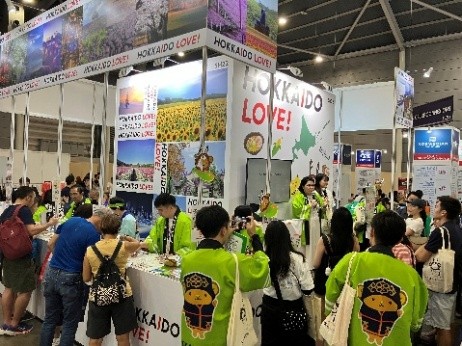
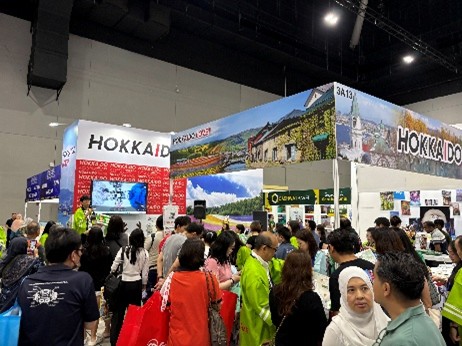
In Singapore’s year-round warm climate, there is strong interest in snow activities and seasonal flowers, making Hokkaido one of the most popular travel destinations among Singaporeans. At the Hokkaido Tourism Organization’s booth, a total of 13 organizations — including our office — participated to promote tourism in Hokkaido to event visitors.

Many attendees were repeat travelers who had already visited Hokkaido, and we received numerous specific inquiries about travel itineraries, timing, and transportation options. At the same time, there was also great enthusiasm for exploring new areas, with many visitors seeking information about Northern and Eastern Hokkaido. When we explained that there are direct flights from Haneda Airport to regional airports across Hokkaido, many showed strong interest.

In addition to snow activities and gardens, visitors expressed diverse travel interests such as enjoying hot springs, camping, and stargazing. Meanwhile, some Muslim visitors voiced concerns about the availability of halal food at travel destinations, reminding us of the importance of greater consideration and preparedness on the receiving side.

■Presentation by Hokkaido Smile Ambassador, Mr. George Lim

At both the main stage and the Hokkaido booth stage, a presentation was delivered by Mr. George Lim, a Hokkaido Smile Ambassador and VISIT JAPAN Ambassador appointed by the Japan National Tourism Agency.

Focusing on the theme of summer in Hokkaido, Mr. Lim introduced visitors to the attractions of Northern and Eastern Hokkaido — including outdoor activities, natural scenery, and local cuisine — effectively showcasing the lesser-known charms of the region.

■Conclusion

Although Singapore is known for having a high rate of FIT (Free Independent Travelers), this event once again reaffirmed the effectiveness of B2C promotions in the local market, as many Singaporeans were actively gathering information on their own.

Our office will continue to collaborate with relevant organizations and partners to make the most of various event opportunities, steadily promoting the many attractions of Hokkaido to the public.

(Picture 1 & 2)Hokkaido Booth (Picture 3)Presentation by Mr. George Lim

Promoting Hokkaido at Singapore’s largest travel fair, “NATAS Holidays 2025” Read More »

Popular Hokkaido Dairy Products in Singapore

Introduction

Hokkaido produced food are very popular in Singapore, and can be found in various stores across Singapore. Among them, dairy products have particularly strong brand recognition. This time, we will introduce Hokkaido dairy products sold in Singapore.

■「HOKKAIDO FRESH SERVE」Soft Serve Ice Cream

Located in the Marina Bay area, a major tourist destination, featuring the Merlion, this ice cream shop offers soft serve ice cream, made from Yakumo Town’s Motoyama Farm. It features the vanilla, and Hokkaido melon flavor, attracting many tourists. The shop also displays the “Hokkaido symbol mark for export”, which promotes Hokkaido brands overseas. This mark is trademarked in Hong Kong, Taiwan, China, South Korea, Vietnam, Singapore, and Thailand, and can be used by restaurants in these countries and regions, helping to showcase the appeal of Hokkaido’s food products.

Hokkaido Cheese on Local Supermarket Shelves

In Singapore, supermarket cheese sections are larger compared to those in Japan, and the popularity of wine—particularly among affluent consumers—has driven up demand for cheese. At major local supermarket Cold Storage, Hokkaido cheeses are sold alongside imported varieties, including Camembert cheese, which is especially popular among Singaporeans for its smoky aroma.

■Yotsuba Dairy Products

In Singapore, supermarket cheese sections are larger compared to those in Japan, and the popularity of wine—particularly among affluent consumers—has driven up demand for cheese. At major local supermarket Cold Storage, Hokkaido cheeses are sold alongside imported varieties, including Camembert cheese, which is especially popular among Singaporeans for its smoky aroma.

■Conclusion

We hear that many Singaporeans, unable to forget the flavors they experienced during their trip to Hokkaido, continue to seek those memorable tastes by purchasing Hokkaido products at local supermarkets after returning home. Our office will continue to seize various opportunities to promote the appeal of Hokkaido’s food, so that even more Singaporeans can discover and enjoy the unique charm of Hokkaido products.

▲ HOKKAIDO FRESH SERVE

▲Yotsuba Dairy’s café au lait and roasted green tea latte on display at Gokoku Shichifuku

Hokkaido cheeses are also sold at Cold Storage

Popular Hokkaido Dairy Products in Singapore Read More »

The Labor Shortage Situation in Singapore and its countermeasures

■Introdution

Singapore has seen remarkable economic development, but like Japan, it is facing the challenges of a declining birthrate and an aging population, leading to a labor shortage. In this context, we will focus on Singapore’s approach to securing human resources, particularly through the acceptance of foreign workers.

■Current Situation of Foreign Workers in Singapore

In Singapore, foreigners must obtain a work visa in order to be employed. There are several types of work visas, including the Employment Pass (EP) for managerial and professional positions, the S Pass for mid-level skilled workers, and the Work Permit for sectors such as construction, manufacturing, and domestic work. Each of these visas comes with specific requirements such as minimum salary thresholds, quotas on the number of foreign workers allowed, and in some cases, nationality restrictions.

According to the Singapore government’s “Population in Brief 2024” report, the total population of Singapore as of June 2024 stands at 6.04 million, representing a 2.0% increase from June of the previous year. One contributing factor to this growth is the increase in foreign workers, particularly in construction and other sectors, as the country catches up on projects delayed during the COVID-19 pandemic.

In everyday life in Singapore, it is common to see Bangladeshi workers at construction sites and Filipino domestic helpers who live in and assist with household chores and caregiving.

■Recent Policies on the Acceptance of Foreign Workers

In recent years, there has been a growing trend of foreign talent being introduced into highly public sectors such as healthcare and law enforcement. For example, in emergency medical services, the shortage of personnel has become critical due to increasing demand driven by an aging population. In response, the Singapore Civil Defense Force (SCDF)—the national emergency service agency—has announced that starting in March 2025, it will begin recruiting emergency medical technicians and paramedics from ASEAN countries.

Additionally, Auxiliary Police Officers (APOs), who support the duties of regular police officers, were traditionally recruited from Singapore, Malaysia, and Taiwan. However, as of January 2024, the Singapore government has expanded the list of eligible countries, and now recruits APOs from Sri Lanka, Myanmar, the Philippines, India, and China.

■Conclusion

Singapore faces challenges similar to those of Japan, such as labor shortages and a declining birthrate coupled with an aging population. However, by leveraging its high wage levels and its strategic location at the heart of Southeast Asia, Singapore has been actively and flexibly attracting labor from neighboring countries. We will continue to gather and share local information with the aim of introducing initiatives that could serve as useful references for addressing issues faced by Hokkaido.

▲ Construction site scene (Photo taken by author)

▲ Ambulance on standby for emergency dispatch (Photo taken by office staff)

The Labor Shortage Situation in Singapore and its countermeasures Read More »

Scroll to Top