■Introduction
My name is Araki, and I joined the Hokkaido Government Representative Office in April. I look forward to working with you.
In late May, I had the opportunity to visit Bangkok on a business trip. As both Singapore and Bangkok are major cities in ASEAN where Hokkaido frequently conducts promotional activities and events, I have prepared a brief comparison of the two cities based on my personal observations and impressions.
■Comparison (Please note that the following observations are based on information gathered during the business trip and are intended to illustrate general trends only.)
| City | Singapore | Bangkok |
| Population | Approximately 6.11 million | Approximately 5.42 million |
| GDP/Person | Approximately 100,000 USD | Approximately 18,000 USD |
| Cityscape Profile | Luxury cars, electric vehicles (e.g BYD, Tesla, etc.), and minivans (primarily used as Grab taxis) are commonly seen. | Motorcycles and Japanese cars are commonly seen. (According to local sources, Japanese brands once accounted for around 90% of the market, but now represent approximately 70%) |
| Popular dinning options among locals | 1st:Chinese cuisine(including local chinese dishes)
2nd:Japanese cuisine(approximately 1500 restaurants) 3rd:Korean cuisine Japanese cuisine has established itself as a premium foreign dinning option, second only to chinese cuisine, which forms the basis of the local food culture of Singapore’s predominantly ethinc chinese population. |
1st:Thai cuisine
2nd:Japanese cuisine(approximately 2600 restaurants) 3rd:Chinese cuisine
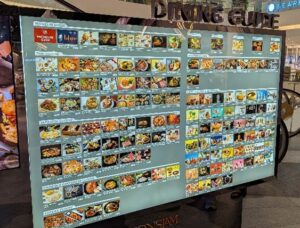
▲ Restaurants in a shoppping mall The restaurants highlighted in blue are Japanese restaurants, which are the second most common after local Thai restaurants. They range from upscale establishments to more affordable casual dining options.
|
| Price of Japanese Cuisine (Lowest-priced plate at a selected conveyor-belt sushi chain) | Approximately 2–3 times higher than in Japan (Approx. JPY 280 per plate) |
Comparable to, or slightly higher than, prices in Japan |
| Popular tourism destination among locals | 1st:Malaysia
2nd:Japan 3rd:Thailand
Malaysia is generally regarded as a destination for weekend getaways, Thailand for resort holidays, and Japan for an annual long-haul vacation. Approximately 80% of visitors from Singapore to Japan are repeat visitors who have travelled to Japan at least twice. (However, Thailand has a higher proportion of very frequent repeat visitors who have visited Japan four or more times.) |
1st:Japan
2nd:China 3rd:South Korea
Japan consistently ranks as the most popular overseas travel destination in virtually every survey. However, China has been gaining popularity rapidly since the introduction of mutual visa exemptions in 2024. In addition to being a more affordable destination than Japan, China’s growing appeal is also attributed to the strong influence of Chinese pop culture, which has become a major trend in Thailand. |
■Conclusion
Although Singapore and Bangkok are both dynamic cities that continue to experience strong growth and therefore share many similarities, I also observed distinct characteristics and underlying differences between them. As we continue to implement Hokkaido’s initiatives in the region, I will keep gathering local insights to ensure that these differences are taken into account when planning and carrying out future projects.
■Indian Film Ek Din Released in Singapore
On 1 May 2026, the Indian film Ek Din was released in cinemas across Singapore. The film is a remake of the 2016 Thai movie One Day and tells a poignant love story set against the winter landscapes of Hokkaido.
Filmed in locations including Sapporo, Otaru, Asahikawa, and Noboribetsu, the movie features many familiar scenes that are well known to Hokkaido residents

▲ According to reviews posted on the website of a major cinema chain in Singapore, one viewer described the film as “a beautiful and heartwarming story that is definitely worth watching.”
Reference:GOLDEN VILLAGE_Ek Din紹介ページ(https://www.gv.com.sg/GVMovieDetails#/movie/8469)
■Indian Culture in Singapore
People of Indian ethnicity make up approximately 9% of Singapore’s population, and Tamil—a language spoken primarily in southern India—is one of the country’s four official languages.
Indian culture is deeply embedded in everyday life in Singapore. Hawker centres throughout the country feature numerous stalls serving Indian dishes such as biryani and curry, while it is also common to see women dressed in traditional saris.
In Little India, Singapore’s Indian cultural district, visitors can explore the Mustafa Centre, a renowned shopping complex offering a wide variety of Indian groceries and products, as well as several Hindu temples that reflect the community’s rich cultural and religious heritage.
■Growing Interest in the Indian Market
India’s rapidly expanding population and strong economic growth have made it an increasingly important market for local governments across Japan. However, given the country’s significant regional diversity in terms of language, cuisine, and ethnic characteristics, it is generally considered more effective to focus on a specific state and develop a targeted strategy rather than treating India as a single, homogeneous market.
With employment opportunities remaining limited in India, a growing number of young people are seeking work overseas, including in Japan. To support this trend, training centres have been established locally to prepare prospective workers for employment in Japan. At the same time, several challenges remain, including a strong preference among applicants to work in major cities such as Tokyo and Osaka, as well as the high level of Japanese language proficiency often required by employers, making successful job matching difficult.
In terms of inbound tourism, many Indian visitors have specific dietary requirements based on their religious beliefs and food culture. As a result, some travellers prefer destinations where Indian restaurants are available or where they have access to cooking facilities. A better understanding of these cultural and dietary needs is therefore considered essential for effectively welcoming more visitors from India.
■Asia’s First Disney Cruise Homeported in Singapore
Since March 2026, the Disney Adventure, the world-renowned Disney Cruise Line’s first ship to be homeported in Asia, has been operating from Singapore. Offering mainly three- and four-night all-inclusive cruises (including accommodation and meals), the ship features a wide range of staterooms, with luxury suites during peak travel periods priced at over JPY 3 million.
As a “dream cruise” where the entire ship is immersed in the magical world of Disney, the Disney Adventure has attracted significant attention in Singapore. Local media outlets have extensively covered its launch, while social media has been flooded with posts from Singaporeans who have already experienced the cruise, highlighting the strong level of public interest and excitement surrounding its debut.
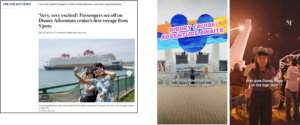
(Far left) The Straits Times, reported on the launch of the Disney Cruise from Singapore.
(Second from the left) Numerous passengers have shared videos of their onboard experiences on social media.
Reference:THE STRAITS TIMES.「‘Very, very excited’: Passengers set off on Disney Adventure cruise’s first voyage from S’pore」(https://www.straitstimes.com/life/travel/very-very-excited-passengers-board-disney-adventure-cruise-for-first-public-sailing-from-spore)
■Tourism Promotion Conducted at Nanyang Technological University
On 31 March 2026 our office participated in the Study Work Travel Seminar organized by the Japan Society at Nanyang Technological University (NTU), where it conducted a tourism promotion session for Hokkaido.
Approximately 40 students attended the seminar held on the university campus. During the session, the Hokkaido ASEAN Office delivered a presentation introducing tourist attractions across various regions of Hokkaido. Following the presentation, students actively asked a variety of questions about traveling to Hokkaido, including the best seasons to visit and other travel-related topics.
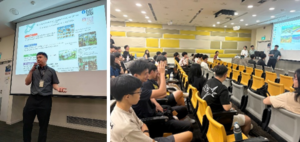
▲ Presentation in progresss
■Impact of the Situation in the Middle East
The global rise in food ingredient costs, fuel prices, and transportation expenses has begun to affect daily life in Singapore. At hawker centres, where many residents dine regularly, the price of a typical meal has increased by around SGD 1 (approximately JPY 125) per dish. In addition, fares for Grab, a commonly used ride-hailing service, have risen by approximately SGD 0.40 (around JPY 50) per trip.
The Singapore Government has also encouraged businesses and households to adopt energy-saving measures. These include setting air-conditioning temperatures at 25°C or higher, managing the operating hours of air-conditioning systems, lighting, and elevators, and unplugging electrical appliances when they are not in use to reduce electricity consumption.
■Introduction
Singapore is home to numerous high-quality concert halls and theaters, and serves as a cultural hub in Southeast Asia where popular artists from around the world frequently perform. In addition, Japanese content enjoys strong popularity, particularly among young people, and it is not uncommon for Japanese artists and actors to visit Singapore for concerts and stage performances.
In this local report, we introduce Japanese content that is more accessible and familiar, focusing on popular Japanese films and characters in Singapore.
■Popular Japanese Films and Dramas in Singapore
Movie theaters in Singapore are quite similar to those in Japan in terms of ticket purchasing systems and screening facilities. However, reflecting Singapore’s multicultural society, a wide variety of films—including Hollywood, Chinese, and Bollywood productions—are regularly screened.
Japanese animated films are also highly popular. In 2025, titles such as Demon Slayer, Jujutsu Kaisen, and Chainsaw Man were screened.
In particular, Demon Slayer enjoyed tremendous popularity. Voice actors visited Singapore in conjunction with the film’s release, and special exhibitions featuring movie materials were held, delighting many fans.
In addition to anime, the theatrical version of Kodoku no Gourmet (Solitary Gourmet)—which also has a strong fan base in Singapore—was screened.
■Growth of VOD services such as Netflix
The use of VOD (video-on-demand) services is widespread in Singapore, allowing many people to easily enjoy films and dramas from around the world.
On Netflix, which has a large user base in the country, Korean and Chinese dramas often dominate the rankings. However, as of March 13, 2026, the live-action adaptation of ONE PIECE ranked No. 1, demonstrating its popularity alongside the original anime and manga.
Meanwhile, the domestic cinema industry has been facing challenges, with a major local cinema chain suspending operations across all its locations last year. The growing popularity of VOD services is considered one of the contributing factors.
■Populartity of Japanese Characters
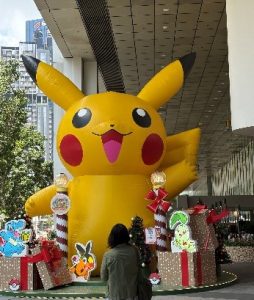
Japanese “kawaii” (cute) culture has also taken root in Singapore. Pop-up stores featuring Japanese characters are occasionally opened, and it is common to see people of all ages carrying items with mascots such as Pokémon and Hello Kitty on their bags.
Singapore also has its own cultural heritage known as Peranakan culture, characterized by its use of pastel colors and charming aesthetics. This cultural background may be one of the reasons why Japanese kawaii culture is so well received.
■Conclusion
In recent years, the spread of social media and VOD services has made it easier to access overseas content. As a result, many people have developed an interest in Japan—and even regions like Hokkaido—through Japanese content.
Our office will continue to closely monitor local trends and explore more effective ways to promote Hokkaido in Singapore.
▼ A giant Pokemon ballon was displayed at a local shopping mall, attracting many visitors who stopped to take photos.
■Introduction
Singapore is home to several world-class universities, attracting talented students from around the world. In addition to academic activities, extracurricular activities such as student clubs are also very active, and our office has been working in collaboration with universities in Singapore on various initiatives.
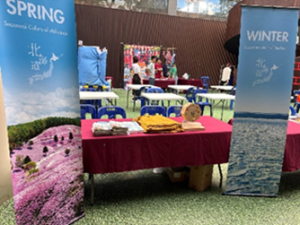
As one example, this report introduces our tourism promotion booth at the “Japanese Cultural Festival” held at Nanyang Technological University (NTU) on February 3 and 4, 2026.
■Nanyang Technological University (NTU)
Nanyang Technological University is one of Singapore’s leading universities, ranked 12th in the world in the “QS World University Rankings 2026” by Quacquarelli Symonds, a UK-based university evaluation organization.
With approximately 33,000 students, it is one of Asia’s top engineering and technology universities. The university also offers Japanese language classes, and students who are interested in Japanese culture, and also runs a Japanese Appreciation Club.
■Japanese Cultural Festival
The Japanese Appreciation Club holds the “Japanese Cultural Festival” every February at campus facilities, providing students and university staff with opportunities to experience Japanese culture, such as traditional festival games, tea ceremony, and handicrafts.
This year, the event was held over two days, on February 3 and 4, and our office participated by setting up a booth to promote tourism in Hokkaido to visitors.
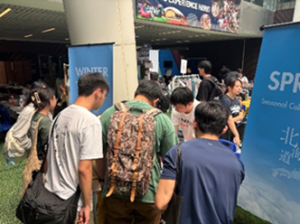
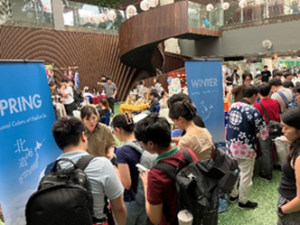
As the venue was located within the university complex with a food court and various shops frequently used by students, many visitors stopped by our booth, including students taking breaks and those passing through the area.
Visitors shared various comments, such as:
“I would like to plan a trip to Hokkaido this summer. Is the temperature lower than in Singapore?”
“I like Japanese history, so I would like to visit historical sites in Hakodate.”
We also heard an interesting story from an Indian student, who said:
“I traveled in Hokkaido for about a week last year. As I am a vegetarian and the dining options were limited, I stayed in a accommodation that has a kitchen and cooked for myself during the trip.”
In Singapore, Hokkaido already enjoys a high level of name recognition, and many people have either traveled to Hokkaido or are familiar with its image—such as its cool climate, snow, and food culture. However, awareness among younger generations is still developing, and through this event we were able to feel the effectiveness of promoting Hokkaido.
■Conclusion
Going forward, in addition to promoting Hokkaido at university events, we will continue to strengthen relationships with local universities and explore opportunities for collaboration that can create new connections between the world and Hokkaido.
▼Scenes at the Japanese Cultural Festival